Smart Metering
Connect consumption data to real operational insight.
Digitize electricity, water and gas metering with centralized readings, history, alerts and analytics.
Challenge
A metering estate is large, mixed and long-lived.
Meters are usually the most numerous assets an operator owns, and the hardest to keep consistent.
Several suppliers, several generations
A metering estate accumulates over decades. Different manufacturers, protocols and payload formats end up side by side, and each one brings its own tool.
A reading is not yet data
A number without a unit, a timestamp and the device it belongs to cannot be compared between periods or between sites.
Anything manual limits frequency
If knowing a value depends on someone visiting the meter, how often you can know is decided by the size of the crew.
Architecture
From the meter to a comparable series.
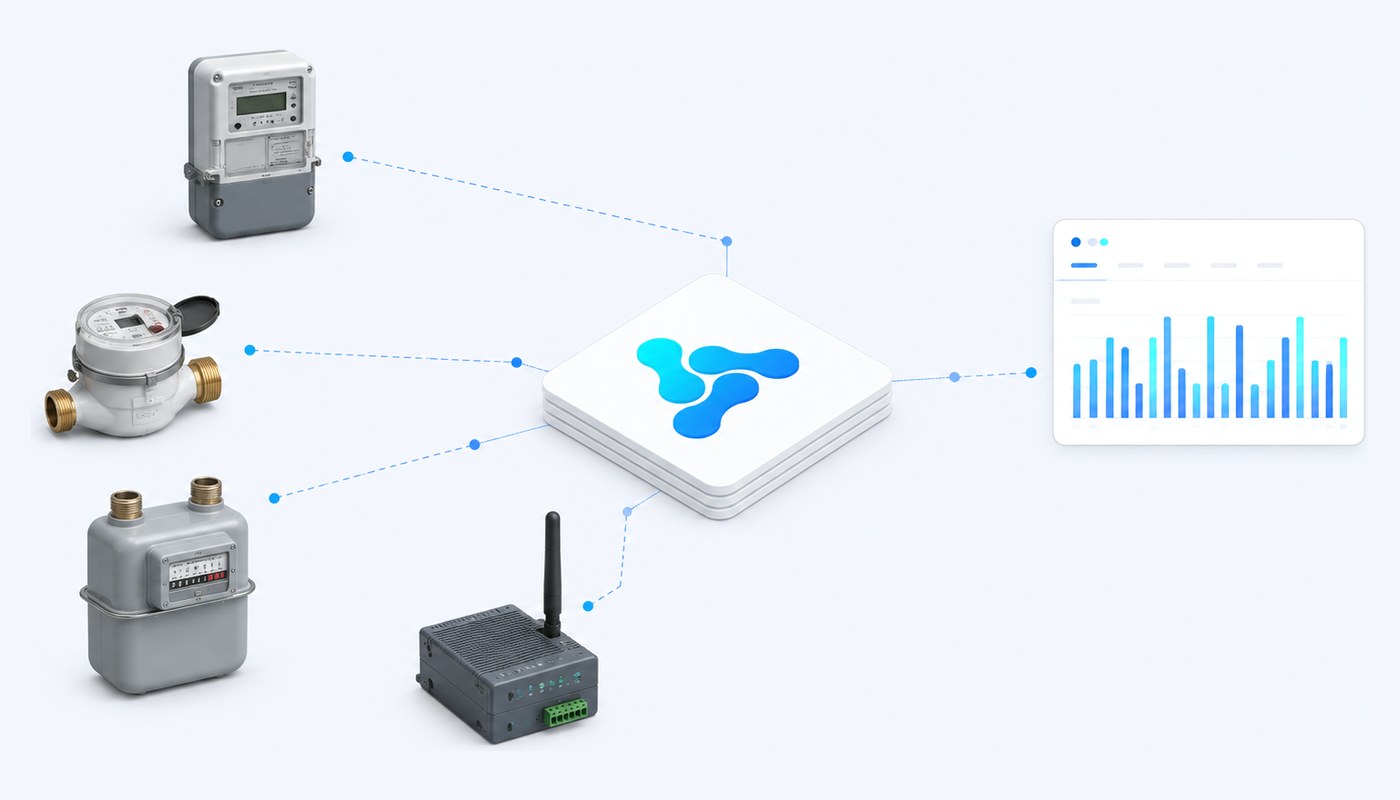
The building blocks are the same as for any other device class. The exact architecture is configured around the meters, protocols and processes of each deployment.
›
›
›
›
What each stage becomes in the platform
Operational scenario
A meter that goes quiet.
Not every useful event is a reading. Sometimes the signal is the absence of one.
Illustrative example
1
Readings arrive on a cycle
Each one is stored as a metric with its value, its unit and a timestamp.
2
One device stops
No new metric arrives for that instance, while its neighbours keep reporting normally.
3
A rule notices
A condition on the device state or the age of the last value crosses its threshold.
4
A notification goes out
The rule effect reaches the people responsible, with the device it concerns.
5
The map shows where
The instance is located, so the question becomes which crew, not which meter.
6
The record holds
The metric history and the audit trail keep what happened and what was changed afterwards.
This example is illustrative. The rule, its threshold and its effect are configured per deployment — the platform supplies the mechanism, not the policy.
Operational scenario
Outcome
Better consumption visibility and reduced manual intervention.
Inside the platform.
What it is built on
The platform capabilities behind this solution.
Use the documented device, data, automation, visualisation and integration capabilities to build a metering solution around your existing infrastructure.
Digital Twins & Device Lifecycle
Meters, concentrators and controllers as models, versions and instances, from enrollment to retirement.
Data, Metrics & Commands
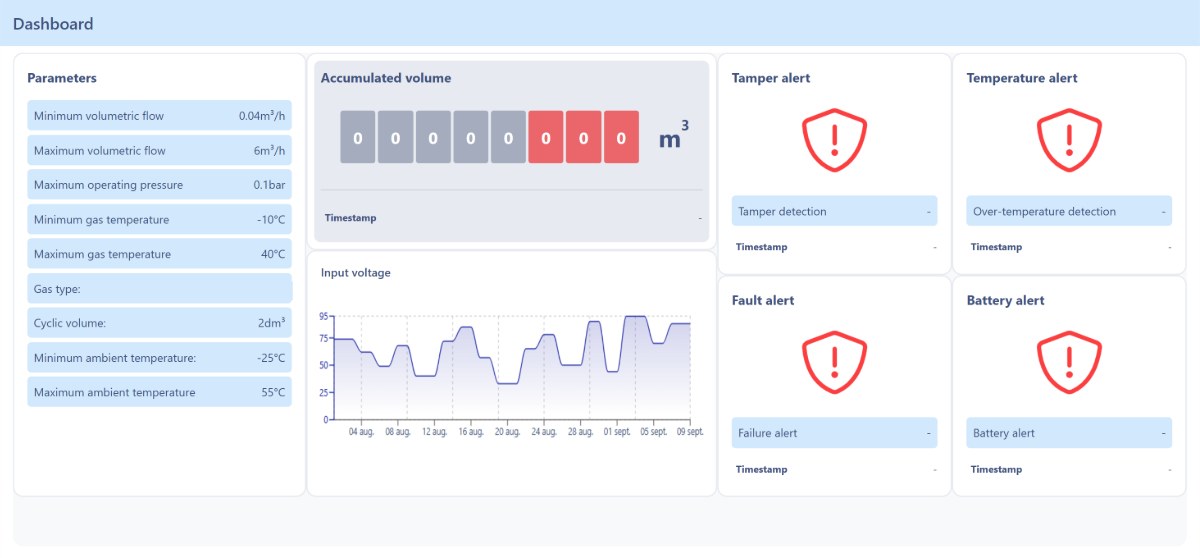
Metric templates that turn payloads into timestamped consumption values, and command templates where the meter supports them.
Rules & Automation
Conditions on consumption, device state and time, with priorities and operational enable or disable.
Connectivity & Integration
Protocols as containerised service instances, plus per-controller CODEC definitions for payload decoding.
Developer & Integration Tools
The integration APIs another system uses to read values or trigger an action on the same objects.
Security & Audit
Roles, permissions and a change history with old and new values on practically every entity.
Fit with what you already have
See how Vision can fit your deployment.
Share your current devices, connectivity and operational objectives.