Smart City Operations
One operational layer across city infrastructure.
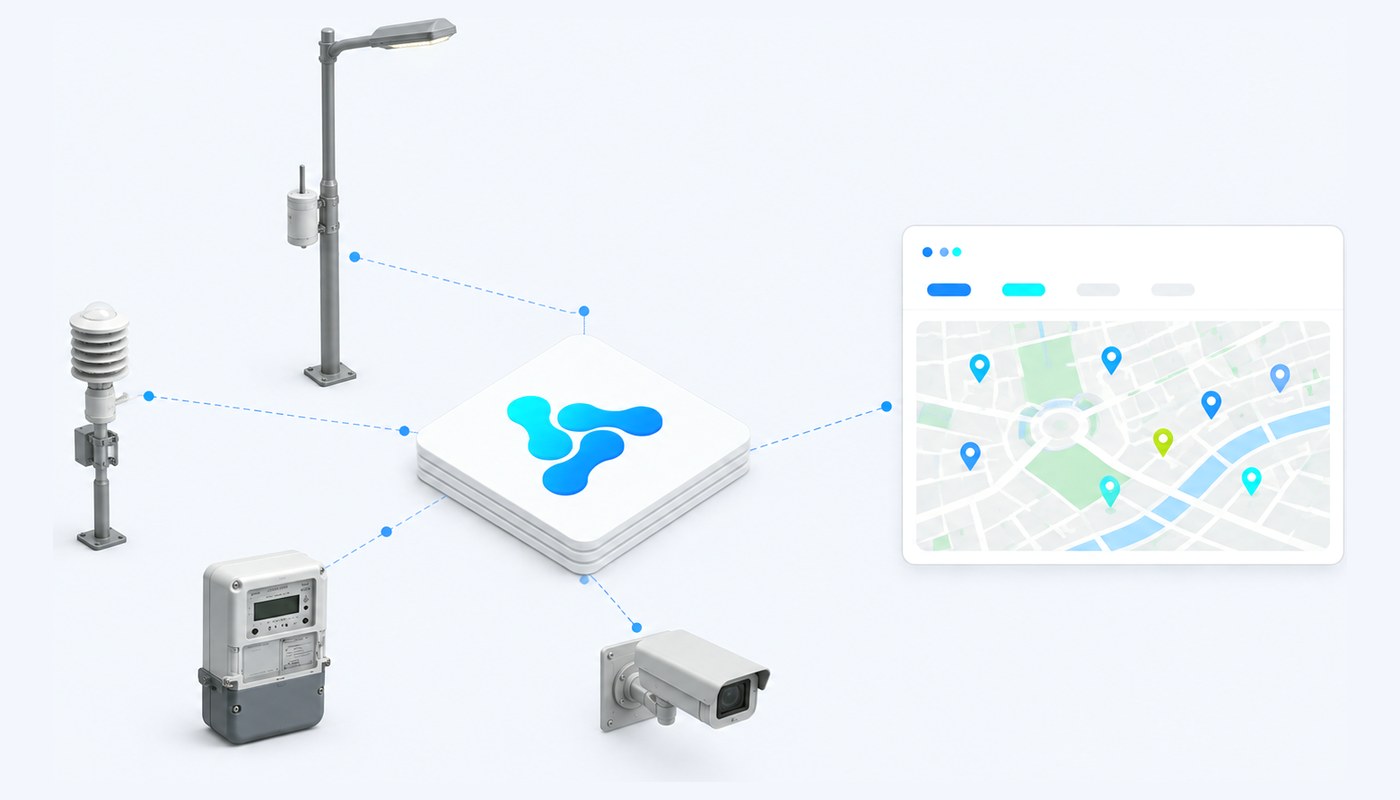
Connect lighting, environment, utilities, video and GIS into one configurable smart-city operating environment.
Challenge
A city buys systems one domain at a time.
Lighting, environment, metering and video are usually procured separately, years apart, by different departments.
One vendor, one portal, one domain
Each procurement brings its own interface and its own user accounts, so an operator ends the day with six logins and no combined picture.
Nothing can be combined
A rule that needs a detection, a reading and a schedule together cannot exist if those three live in three systems.
Nobody owns the whole
Departments are accountable for their domain. The city is accountable for the outcome, and there is rarely a layer that matches that.
Architecture
One operational layer across domains.
Every domain is described with the same three levels — model, version, instance — which is what allows them to appear on one screen and inside one rule. The exact architecture is configured around the systems each city already owns.
›
›
›
›
What makes a shared layer possible
Operational scenario
An evening that involves three domains at once.
The point of a shared layer is the condition that no single-domain system could have expressed.
Illustrative example
1
A detection arrives
A camera reports differentiated presence in a configured zone, stored as a metric on that instance.
2
A reading is already there
An environmental sensor nearby has been reporting on its own cycle, into the same metric model.
3
One rule reads both
The condition combines the detection, the reading and the time of day with AND/OR — something no single-domain tool could express.
4
The effect reaches lighting
A command template raises the level on the group covering that stretch, and response metrics confirm what was applied.
5
The right department sees it
Roles and organisational units decide who is shown the event and who may act on it.
6
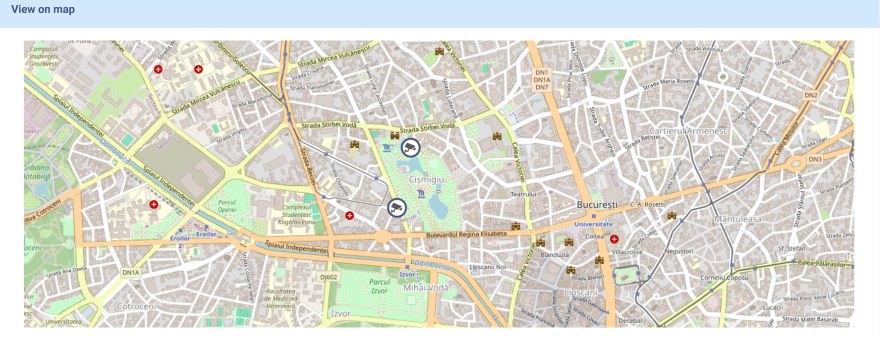
One map holds the picture
The camera, the sensor and the luminaires are on the same map, so the situation has a place, not just a log line.
7
The record is one record
Metrics, command states and the audit trail sit together rather than in three systems that have to be reconciled later.
This example is illustrative. Which domains a city connects first, and in what order, is a procurement decision — the platform does not require all of them at once.
Operational scenario
Outcome
Unified visibility and coordinated urban operations.
Inside the platform.
What it is built on
The platform capabilities behind this solution.
A city operations layer is not a separate product. It is the same platform, with more than one domain enrolled in it.
Digital Twins & Device Lifecycle
Every public asset as model, version and instance, in one registry with one lifecycle.
Rules & Automation
Conditions that cross domains, with priorities and operational enable or disable.
GIS & Spatial Operations
One interactive map for the whole city, with filters, shapes and map profiles per view.
Dashboards & Visualization
Screens per audience and per installation, built from a widget palette.
Enterprise Administration
Organisational units, operators, states, units of measure and the holiday calendar.
Security & Audit
Roles and permissions per organisational unit, and a change history on practically every entity.
Fit with what a city already owns
See how Vision can fit your deployment.
Share your current devices, connectivity and operational objectives.